
素の美 ―― 行為の痕跡として
水刻のドローイング<2003〜2014>
素の美のかたち
The Form of Unadorned Beauty
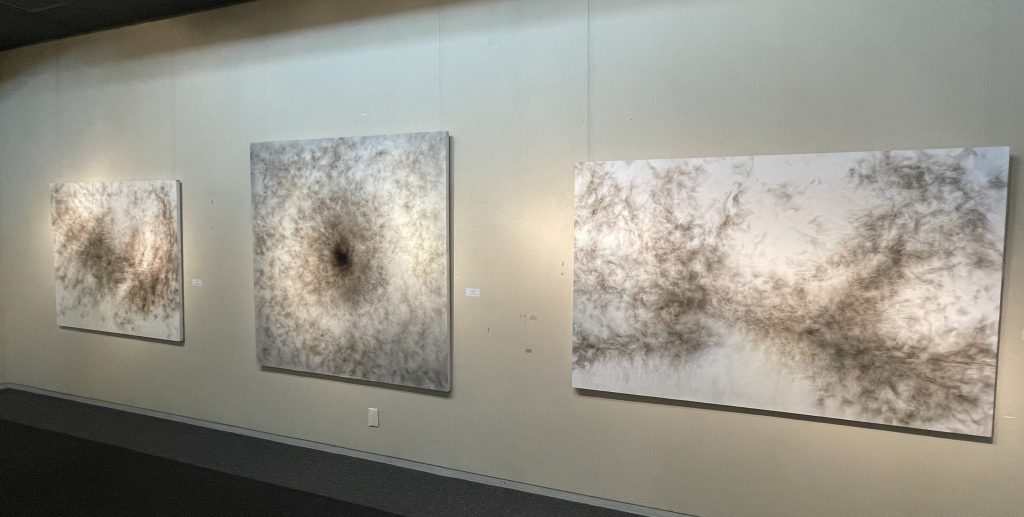
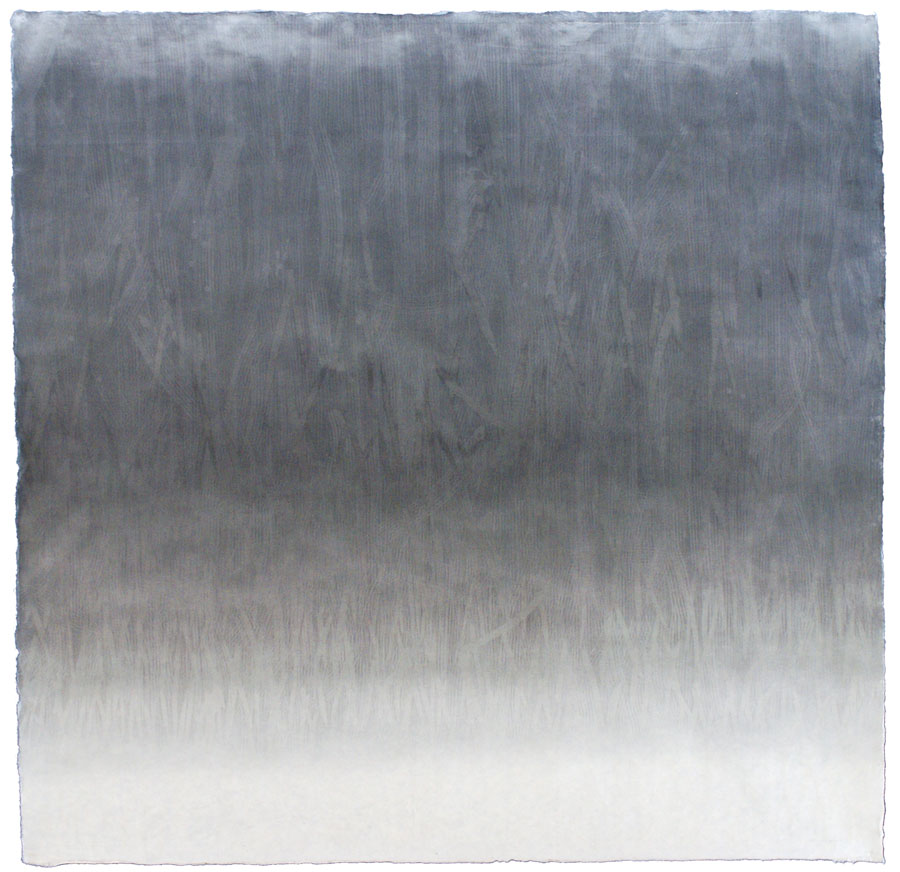
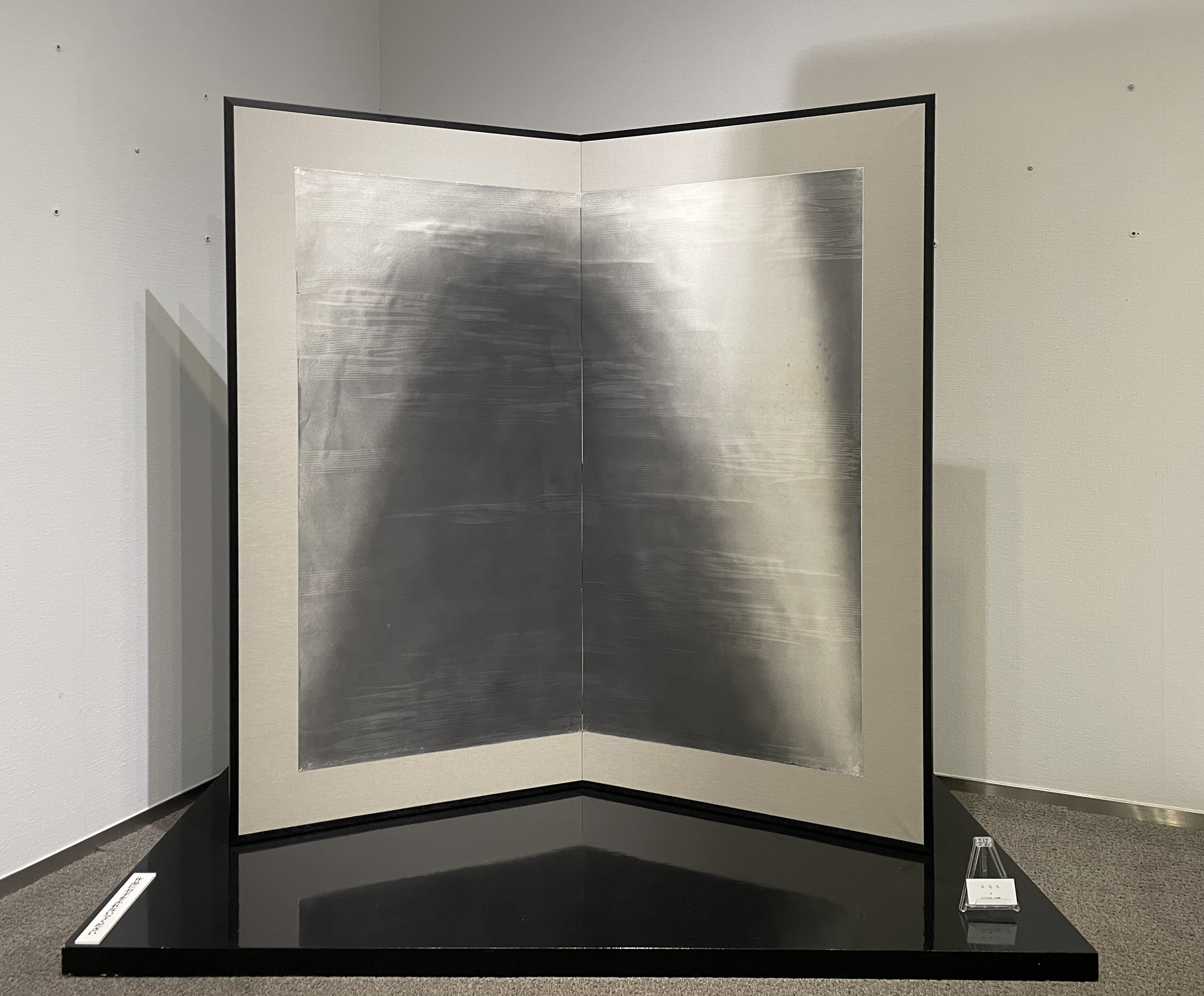
私は、和紙にドーサ液でドローイングを施し、そこへ墨や藍を吹き付けることで、その痕跡を浮かび上がらせる技法を用いている。
I draw on washi paper using dōsa—a transparent liquid sizing—and then spray ink or indigo over the surface to reveal the hidden traces of these gestures.
透明なドーサで描かれた線や面は、一見何もないように見える。
At first, the lines and shapes made with clear dōsa appear invisible.
しかし、墨や藍が和紙に触れると、その「行為」の痕跡が静かに立ち上がる。
Only when ink or indigo touches the paper do these acts of drawing begin to emerge, as if rising quietly from within.
私自身ですら何を描いたのかすぐにはわからないこの過程は、描くという行為をより純粋で誠実なものへと導いてくれる。
Even I cannot immediately see what has been drawn. This delayed revelation purifies the act of creation, allowing it to unfold with sincerity and honesty.
和紙に残るドーサの跡は、私の身体の動き、呼吸、無意識の選択の痕跡であると同時に、
The traces left behind are not only records of my movements, breath, and unconscious choices,
和紙の繊細さと、墨や藍のもつ有機的な性質が織りなす表現でもある。
but also expressions of the washi’s delicacy, and of the organic nature of ink and indigo interacting with it.
それは、私という存在と、素材とが重ねる静かな対話であり、
Each work is a quiet accumulation of dialogue—between my body, the paper, and the materials.
素材と行為の共鳴から生まれる、「素」の美のかたちである。
It is a resonance of gesture and matter, giving form to what I call the beauty of the unadorned.
表現としての煤
2015年より
私は新たな芸術的試みとして、墨の原料である油煙から立ちのぼる煤を、和紙やキャンバスに直接写し取る行為を始めた。
このプロセスにより、黒という色を、極限まで微細な粒子の状態で表現することが可能となった。そこに現れる煤のかたちは、まるで炎そのものを写し取ったような、火の姿が可視化されたかのようである。
私は、画面に触れることなく描いている。
より正確に言えば、これは描くことを拒む絵画であり、描かずして描かれる表現の一形態なのかもしれない。
制作の過程では、意識と無意識が同時に画面上に共存している。
これは未知なる領域への第一歩なのだろうか。
私は、いまだ開かれていない地平線、その向こうに広がる可能性の気配を感じている。
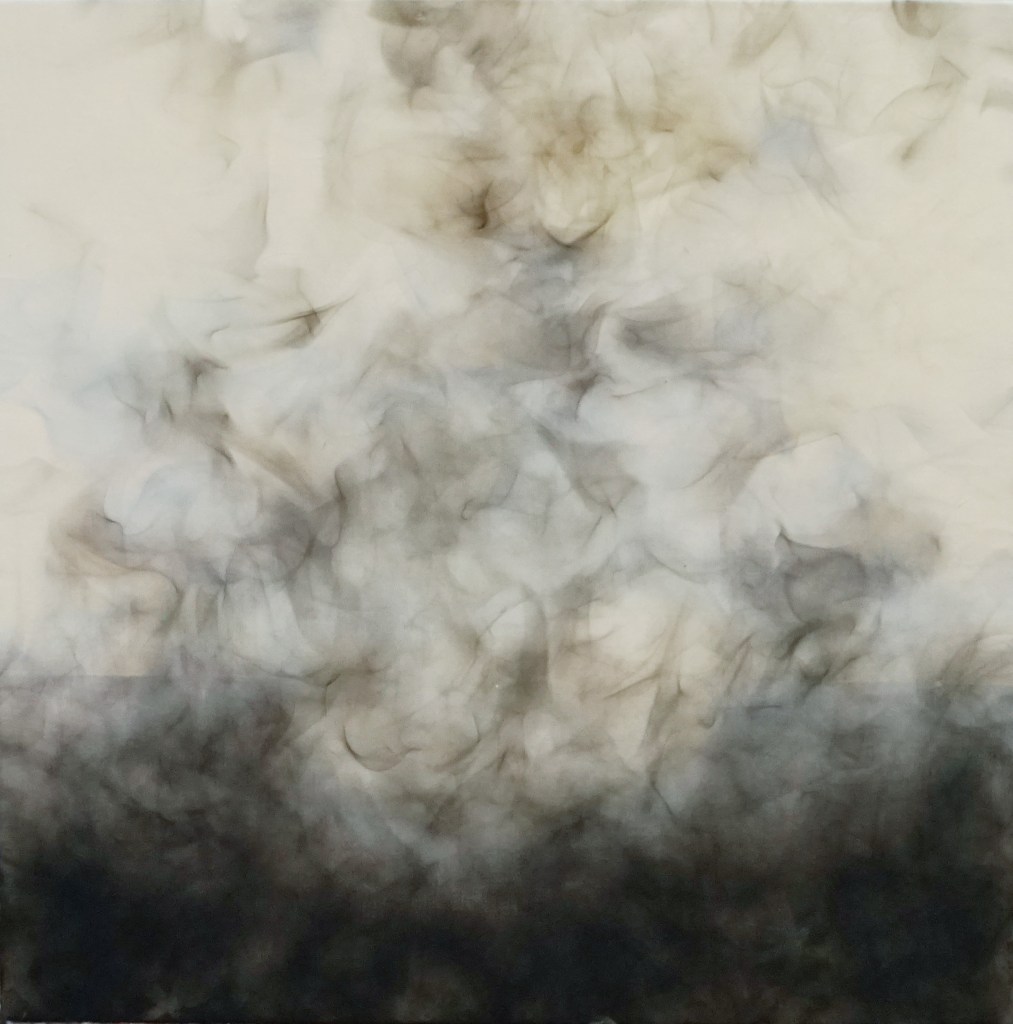
Since 2015, I have embarked on a new artistic endeavor: capturing soot—born from the oily smoke used in traditional ink-making—directly onto washi paper and canvas. Through this process, I have been able to express black in its most infinitesimal, particulate form. The soot takes on shapes that appear as though they are impressions of flame itself—manifestations of fire made visible.
Without ever touching the surface, I am painting. Or more precisely, this is painting that refuses to be painted. It belongs, perhaps, to a category of works that are drawn without drawing.
In this process, both the conscious and the unconscious coexist on the surface of the work. I wonder: is this the first step into an uncharted realm? I sense a growing possibility—a horizon yet to unfold.
障壁画『水・地・風・火』火風」
Barrier Paintings: “Water, Earth, Wind, Fire”
主題解説 / Thematic Concept
この障壁画シリーズは、宗教的な宇宙観に着想を得て制作されました。人間の存在は、宇宙を抜きには語ることができません。
その広大な宇宙の中に地球が存在し、私たちはそこに生かされています。
本作では、生命に不可欠な四大元素——水・地・風・火——をテーマとしています。
水は地球上のすべての生命の源。
地はあらゆる生き物が還っていく場所。
風は生命を維持するために欠かせない大気の象徴。
火は生命エネルギーの象徴であり、同時に浄化をも意味します。
This series of barrier paintings draws inspiration from a religious cosmology, reflecting the idea that human life cannot be understood apart from the universe.
Earth exists within the vast cosmos, and we are given life in its embrace.
The paintings center on four essential elements—Water, Earth, Wind, and Fire—each representing a vital force of nature.
Water is the source of all life on Earth.
Earth is where all living beings ultimately return.
Wind symbolizes the atmosphere, indispensable for sustaining life.
Fire represents the energy of life and also serves as a force of purification.
「水」および「地」 / Water and Earth
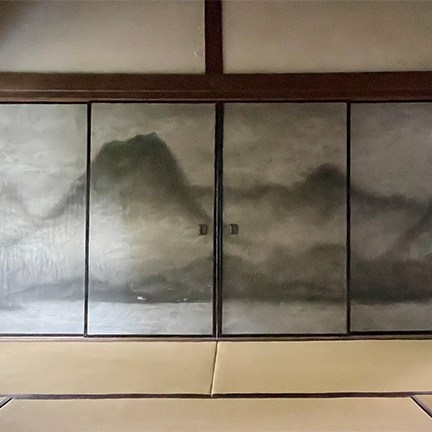
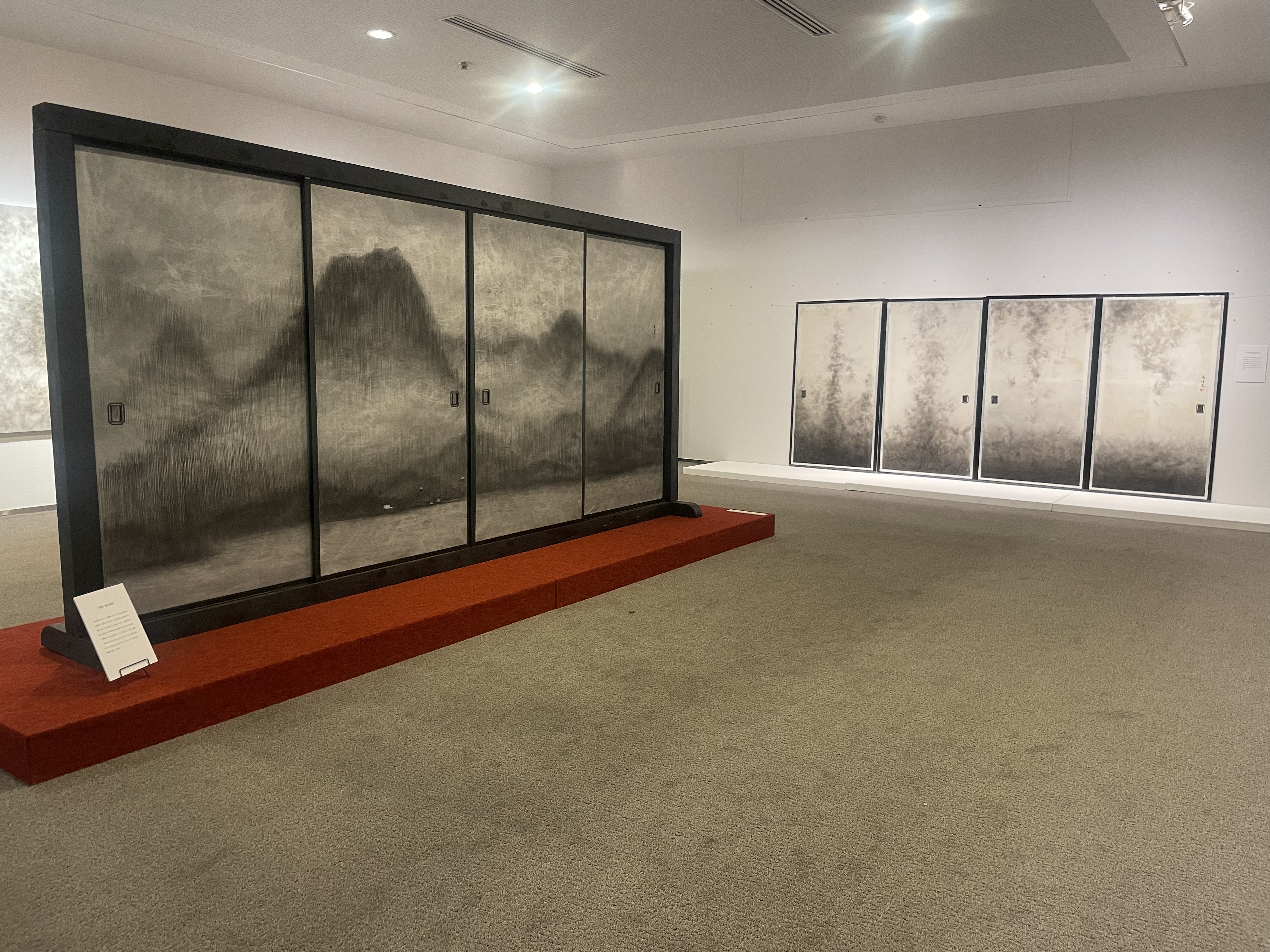
会館東側の仏間に面した襖絵には、「水」の情景が描かれています。
大海原に雨が注ぎ、天と海が循環する様を表現しています。その裏面は「地」で、妙覚寺の南方にそびえる「大川山」の姿を描いています。
妙覚寺から望むこの山々は、神々しく、美しい姿を見せてくれます。
The fusuma panels facing the Buddhist altar room on the east side of the hall depict “Water”—rain falling upon a vast ocean, symbolizing the eternal cycle between sky and sea.
The reverse side portrays “Earth,” featuring the majestic Mount Ōkawa to the south of Myōkakuji Temple.
Viewed from the temple grounds, the mountain appears both sacred and serene.
「風」および「火」 / Wind and Fire
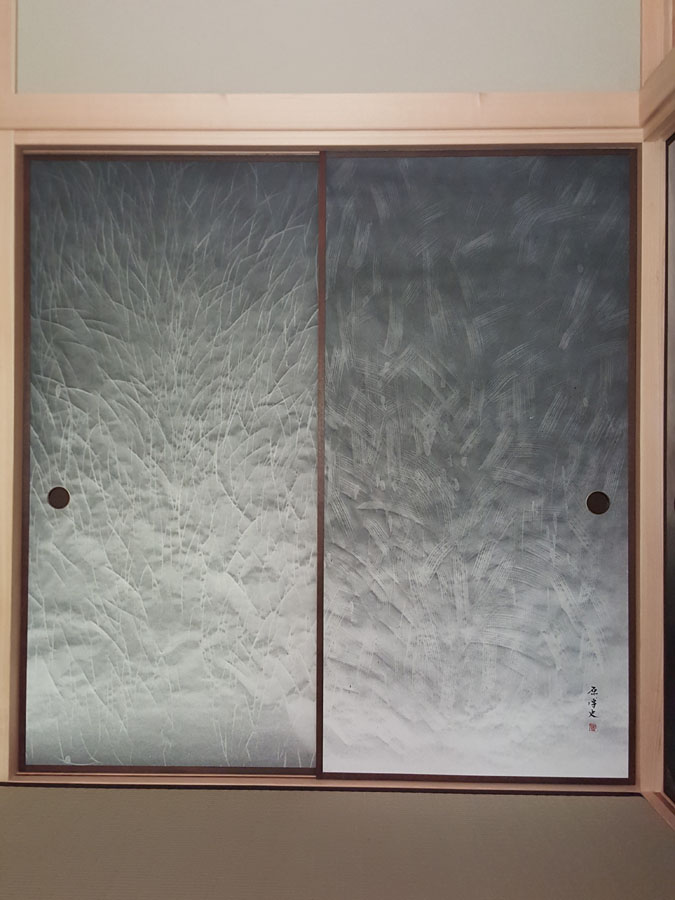
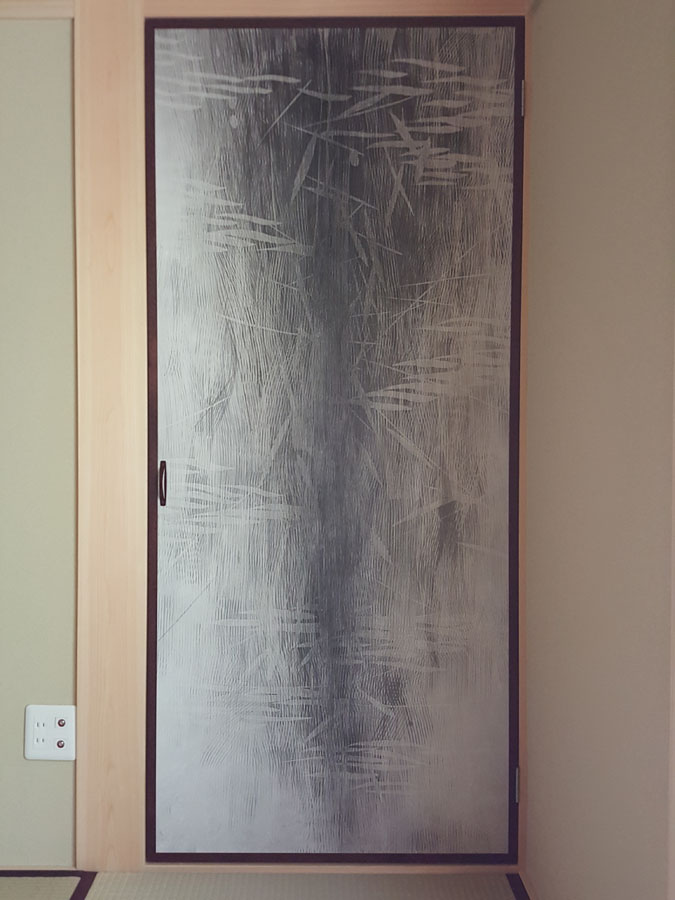
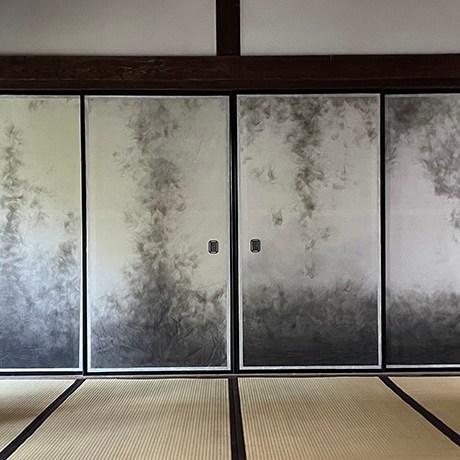
中央の間、東に面した襖絵には「風」が描かれています。
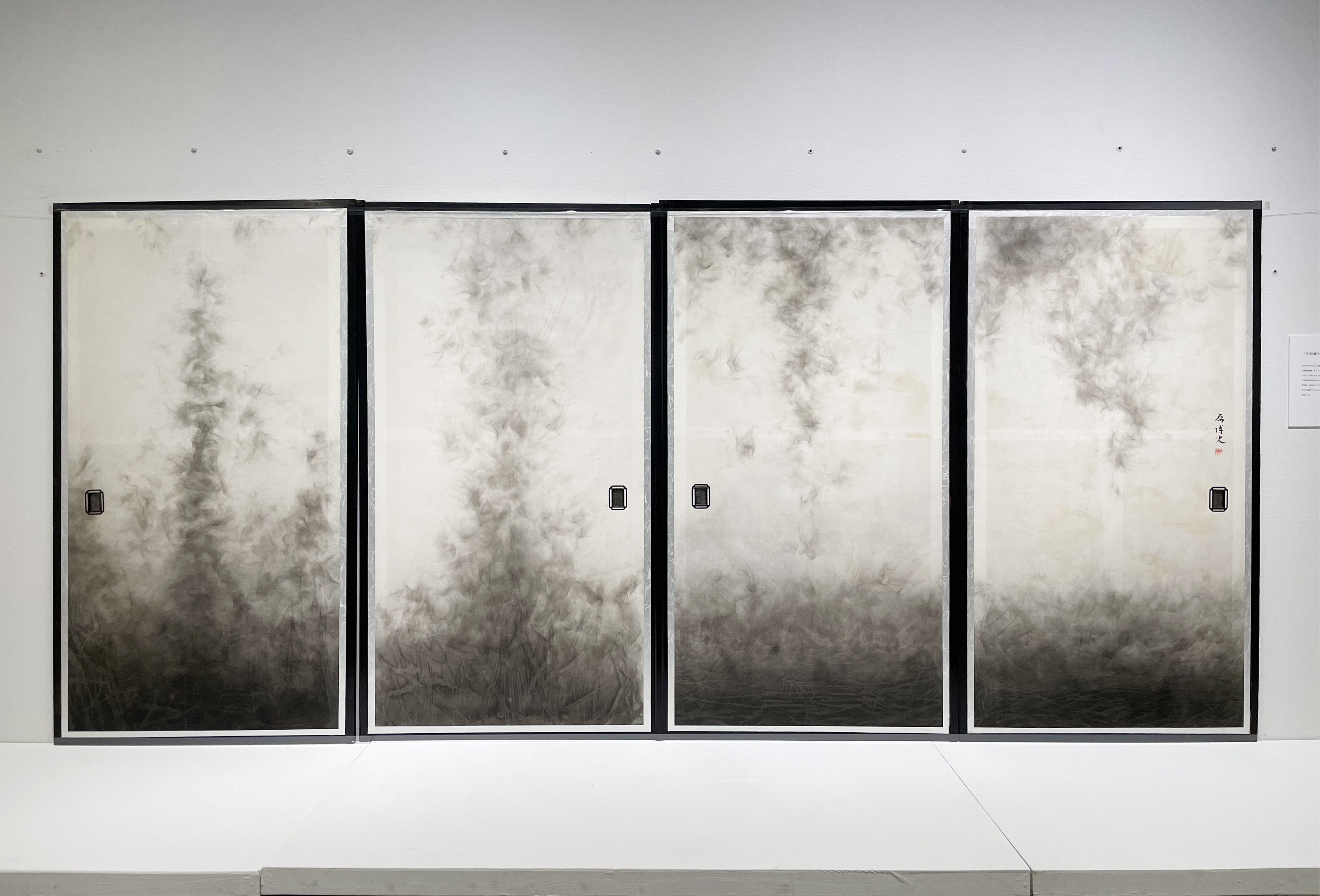
大海原から立ち上る竜巻をイメージし、荒れ狂う大気が海水を巻き上げる迫力ある情景です。その裏面には「火」が描かれ、火炎が渦を巻くように立ち上がる様子が、生命力と浄化の力を象徴しています。
In the central room, the east-facing panels depict “Wind” through the dynamic image of a tornado rising from the ocean—an intense scene showing the atmosphere in violent motion.
The reverse side represents “Fire,” portrayed as swirling flames, evoking the raw power of life and the force of spiritual purification.
屏風ヶ浦海岸寺障壁画
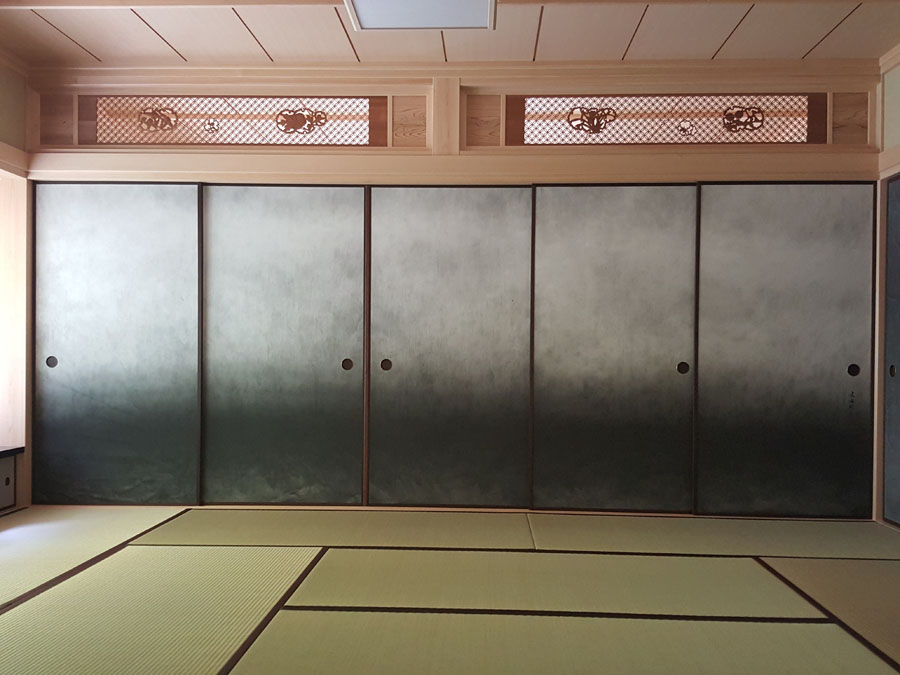
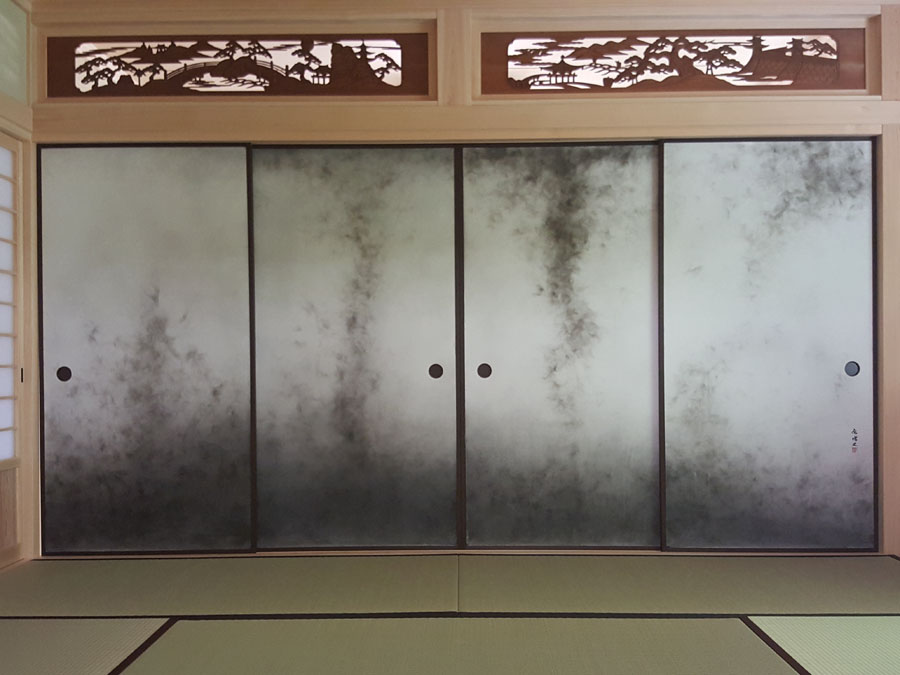
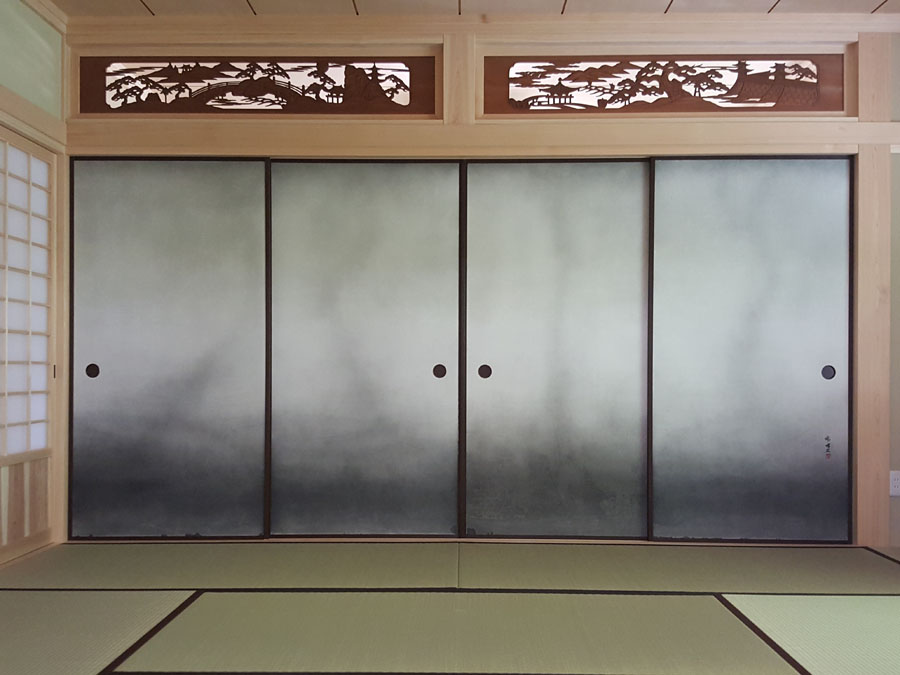
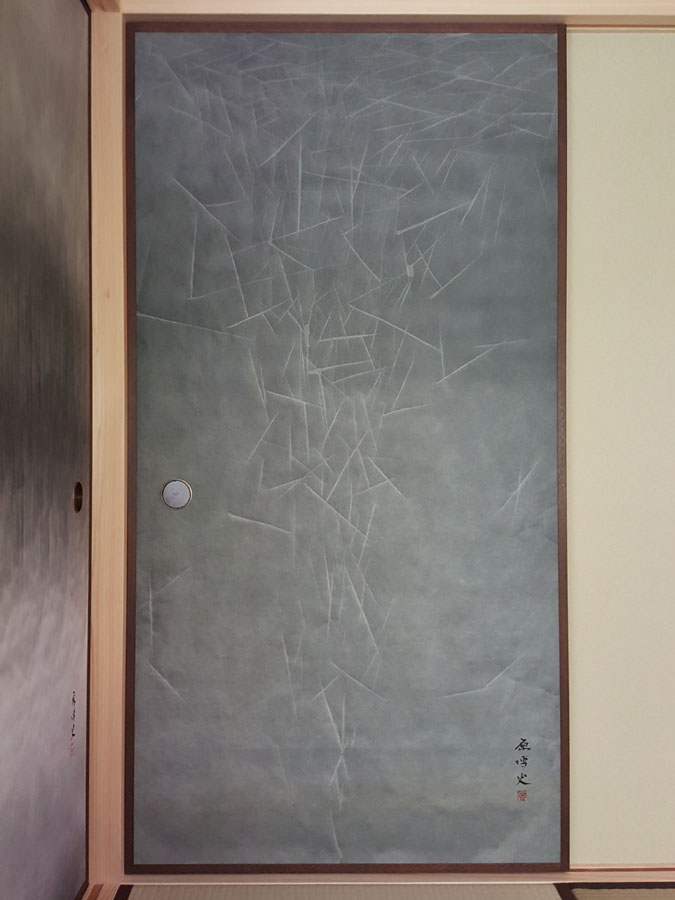
香川県多度津町にある屏風ヶ浦海岸寺に奉納した障壁画。海岸寺は、弘法大師の母親である玉依御前ゆかりの地で大師ご生誕の際に産湯を使った石の桶がある歴史と由緒ある寺院です。
多度津町では、新企画として「たどつアートフェスてティバル」が2021年11月20日より28日まで開催されました。多度津町ゆかりのアーティストで構成されるアートイベントで、私もその一人として招待されこの企画の一つとして海岸寺障壁画奉納を依頼され制作しました。
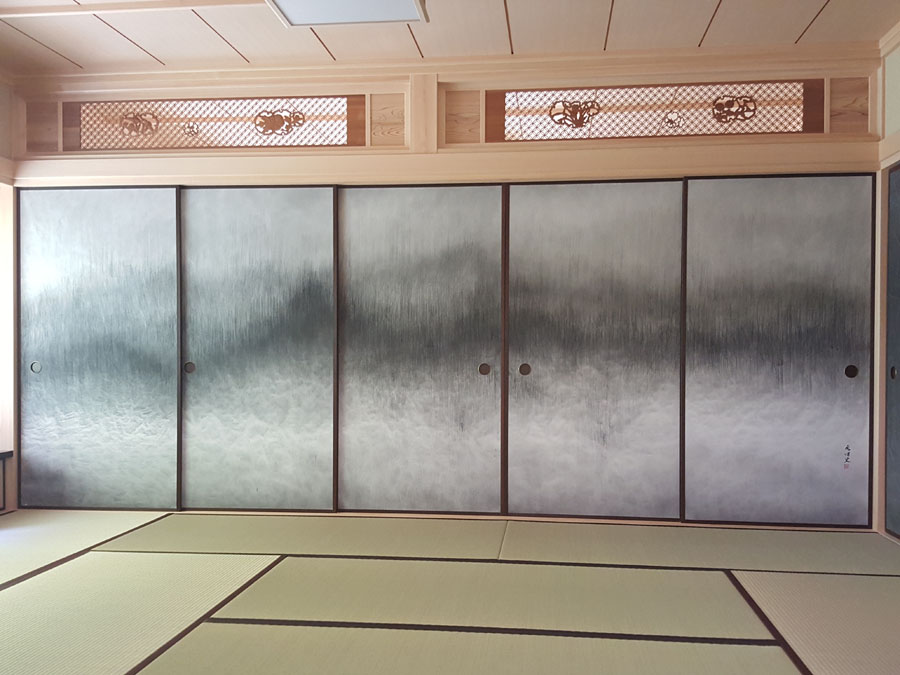
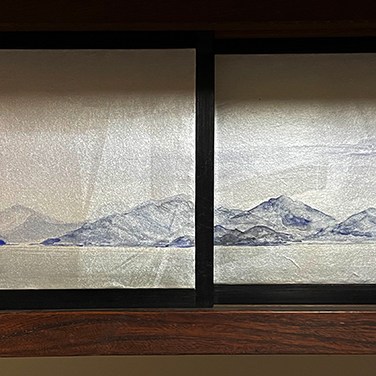
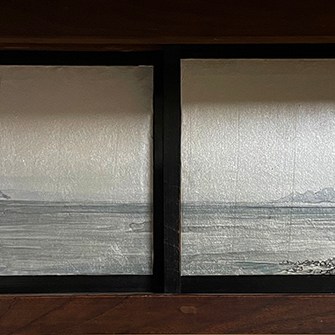
2021年4月に取材を始めてから約半年かけて制作した障壁画三点を11月12日(金)に海岸寺へ奉納しました。収めた部屋は、旧多度津藩藩主京極氏をお迎えする京極上段の間です。上段の間床脇棚の扉にも二点描きました。
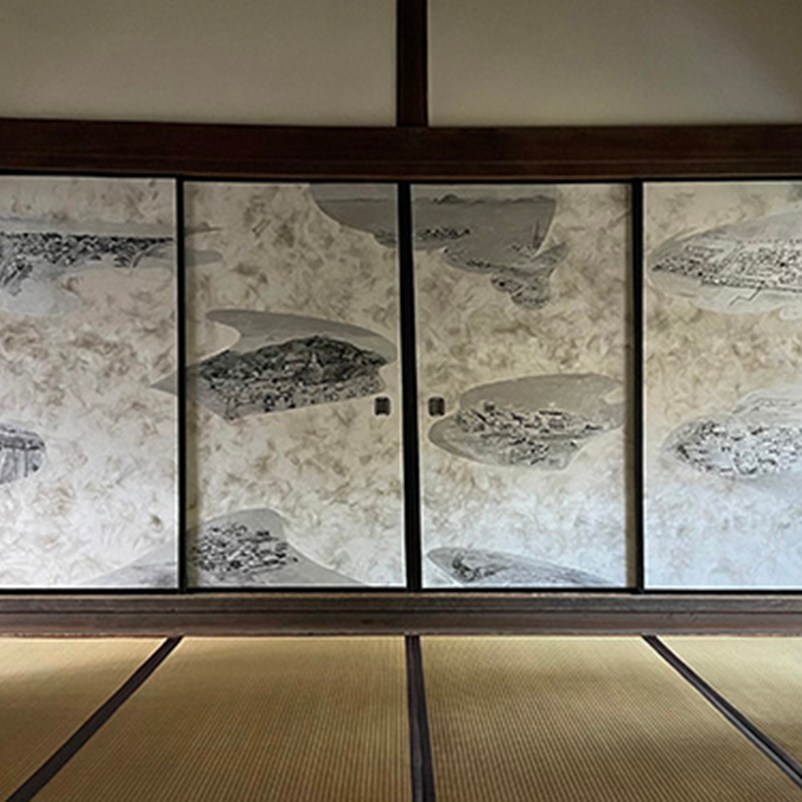
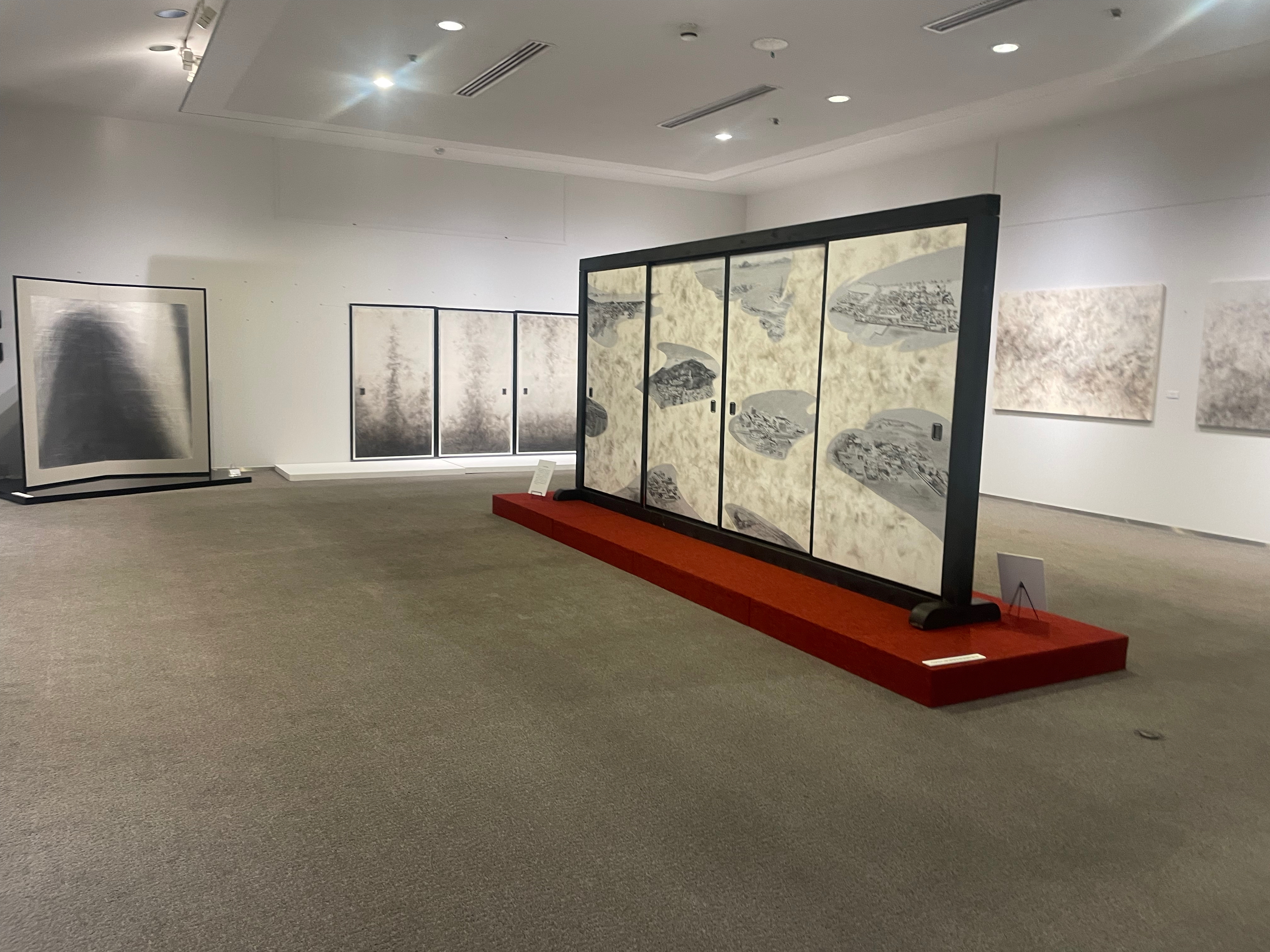
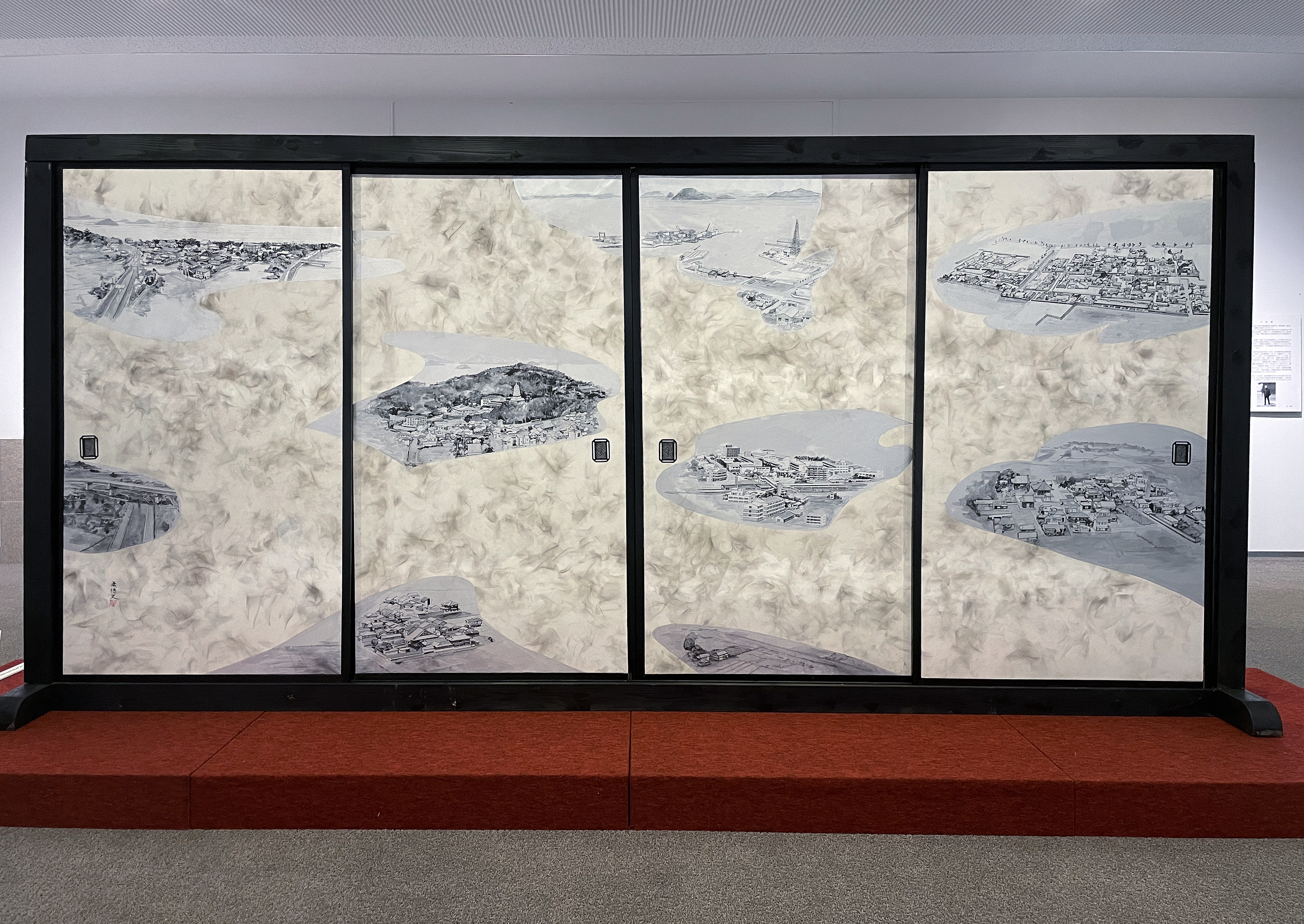
作品の一つ「多度津町鳥瞰図」は、部屋の由緒に基づき構想し描きました。多度津町の風景を題材とし鳥瞰図として雲の合間から町の特徴的な場所を9箇所描きました。多度津町は、面積は小さいのですが歴史ある寺院も多く、中心にある桃陵公園は、町のシンボルとなっています。小さな小山ですが梺に少林寺拳法総本山の建物がオリエンタルな雰囲気を醸し出しています。また、江戸時代北前船の寄港地として栄えた港町で今は、造船所が巨大な船を作り世界の海へ送り出しています。そして明治時代には、四国の鉄道と電力発祥の地となり四国経済の発祥地でもあります。そして部屋の名の由来となる旧多度津藩藩主京極氏の陣屋と家中屋敷を資料館にある精巧なジオラマを基に題材としました。
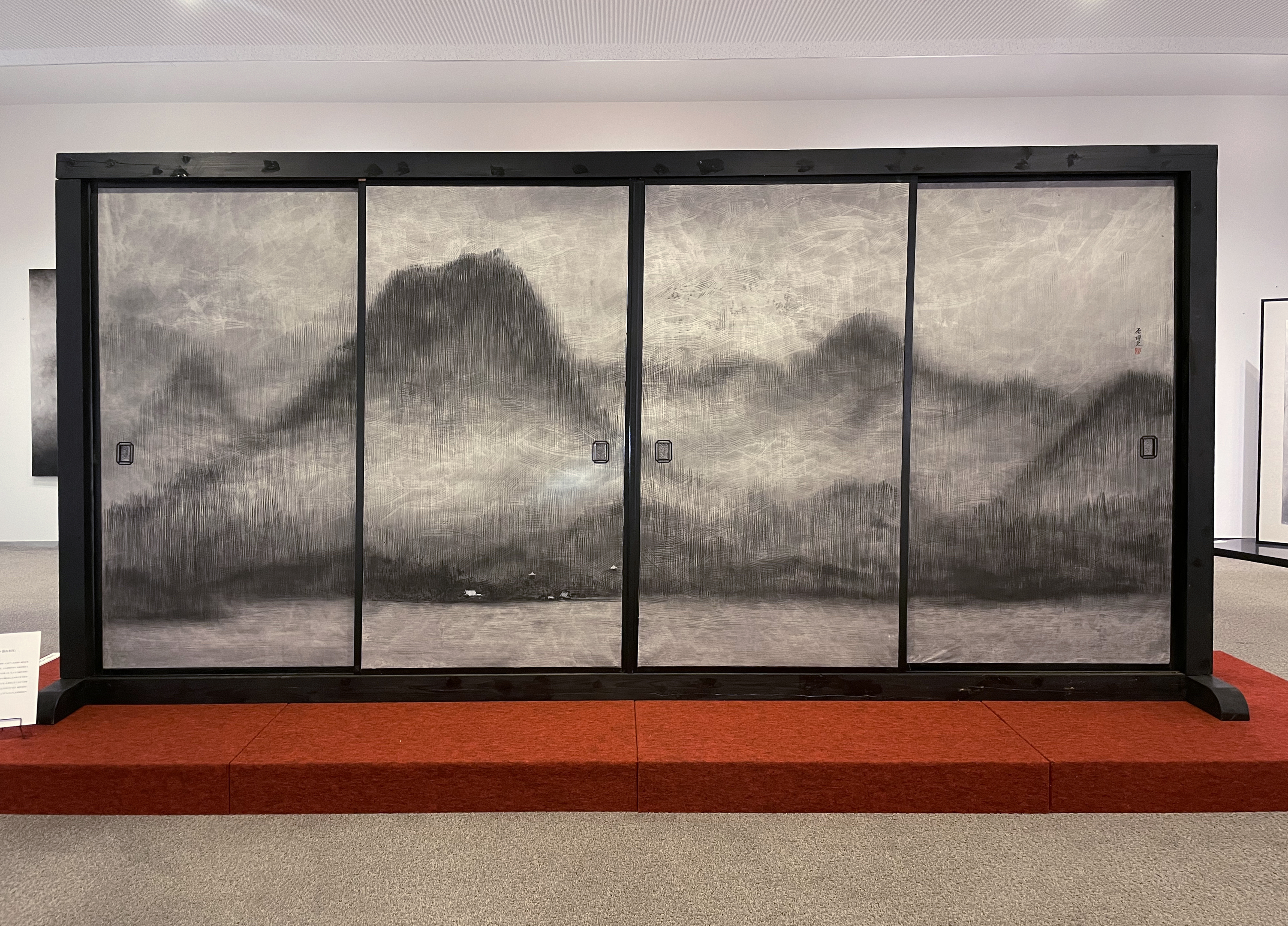
上段の間に面した襖絵は、弘法大師が書かれた「三教指帰」に出てくる屏風ヶ浦の由来を題材として描いたものです。この書物の中に大師が唐から帰国し京に入る為待機していた数ヶ月、ちょうど海岸寺沖を航行した時、自分の故郷を海から眺めることがありその様を「屏風のように山々が聳えている」と形容したことから屏風ヶ浦と呼ばれるようになったと言われています。海岸寺沖に浮かぶ「高見島」に渡り取材して大和絵風にデフォルメした逆遠近法の構図で描いています。
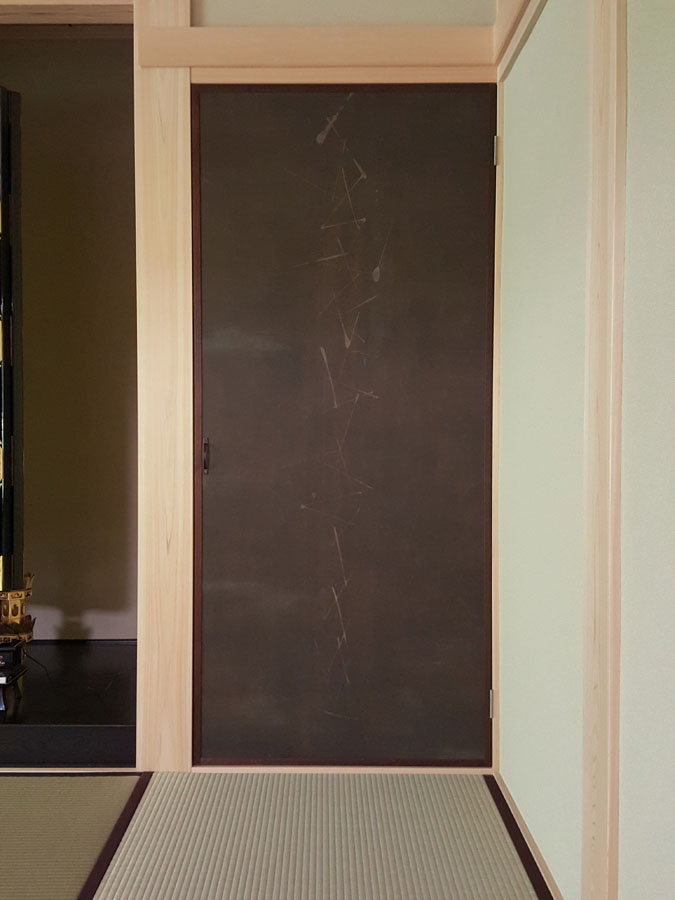
もう一点は、お寺に安置されている鎌倉期の不動尊像「金刀比羅不動迦楼羅像」をイメージして制作したものです。これは、具象ではなく私が独自の技法として用いている油煙を直接定着させる技法で描いています。炎を直接、支持体に当てた時、瞬間的に冷えることで生じる油煙のフォルムが不動のイメージと結びつき描きました。
このお寺には、雪舟の水墨画や、良寛の書など仏画以外にも優れた宝物がありこのような場所に奉納できたことは、一人の作家として大きな喜びでした。
Wall Paintings Dedicated to Kaiganji Temple
—A Dialogue Between History, Landscape, and the Sublime—
These wall paintings were created as a dedication to Kaiganji Temple, situated along the Byōbugaura coast in Tadotsu, Kagawa Prefecture.
The temple is steeped in history, intimately connected to Tamayorigozen, the mother of Kōbō Daishi. It is said that a stone tub used for Daishi’s first bath still remains—a relic that speaks to the deep lineage of this sacred place.
In November 2021, the town of Tadotsu launched a new cultural initiative, the Tadotsu Art Festival, held from the 20th to the 28th.
I was invited to participate as one of the artists with ties to the town, and was entrusted with the creation of these wall paintings as a central project of the festival.
After beginning research in April 2021, I spent about six months completing three wall paintings, which were officially installed in Kaiganji on November 12.
They were placed in the Kyōgoku Jōdan-no-ma, the chamber traditionally used to receive the lords of the Kyōgoku family, former rulers of the Tadotsu domain.
Two of the works were painted directly onto the sliding doors of the alcove shelves in the same chamber.
One of the works, A Bird’s-Eye View of Tadotsu, was conceived in homage to the historical significance of the room.
It depicts nine key sites within Tadotsu, as seen from above, emerging between layers of clouds.
Though the town is small in area, it is home to many historic temples, and Tōryō Park—a symbolic hill at its center—creates a striking presence.
At the base of this small elevation stands the headquarters of Shōrinji Kempo, imbuing the town with an atmosphere of Eastern spiritualism.
Once a bustling port of call for the Kitamaebune shipping route during the Edo period, the harbor today is home to a shipyard that sends colossal vessels out to sea.
Tadotsu also played a pivotal role in the modernization of Shikoku, as the birthplace of the island’s railways and electric power.
The painting also incorporates the former Kyōgoku family’s residence and encampment, rendered based on a detailed diorama preserved in the local museum.
Facing the center of the Jōdan-no-ma is a sliding-door painting inspired by Byōbugaura, a place referenced in Kōbō Daishi’s early work Sankyō-shiki (The Indications of the Three Teachings).
According to legend, when Daishi returned from China and waited several months before reentering the capital, he sailed near Kaiganji and gazed upon his homeland from the sea.
The sight of mountains rising like folding screens moved him to describe the landscape as such—hence the name Byōbugaura (“folding screen shore”).
I visited Takamijima, an island floating off the coast of Kaiganji, and composed the scene in a yamato-e style with reverse perspective, distilling the view into a poetic form.
The third piece is inspired by a statue of Kompira Fudō Karura, a Kamakura-period guardian deity enshrined in the temple.
Rather than depict the figure representationally, I employed a personal technique: capturing the ephemeral forms of soot created by flame directly onto the support.
The image arises from the shape of the smoke itself—formed by the sudden cooling of oil soot as fire meets the surface—evoking the stillness and intensity of Fudō Myō-ō.
Kaiganji Temple holds not only sacred images but also artistic treasures, including ink paintings by Sesshū and calligraphy by Ryōkan.
To have been able to dedicate my work to such a place—rich in spiritual and artistic heritage—was a profound honor as an artist.
performance
アートで田んぼ2016にて即興音楽集団「即興現場」の演奏に合わせ白布のテントに炎を用いて描くパフォーマンス。
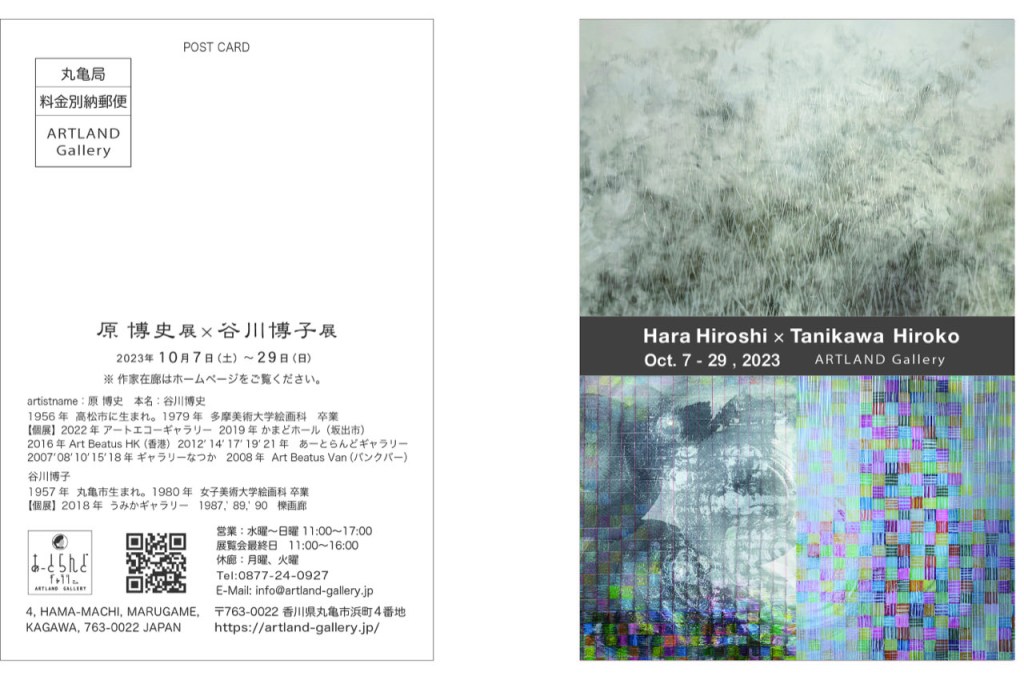
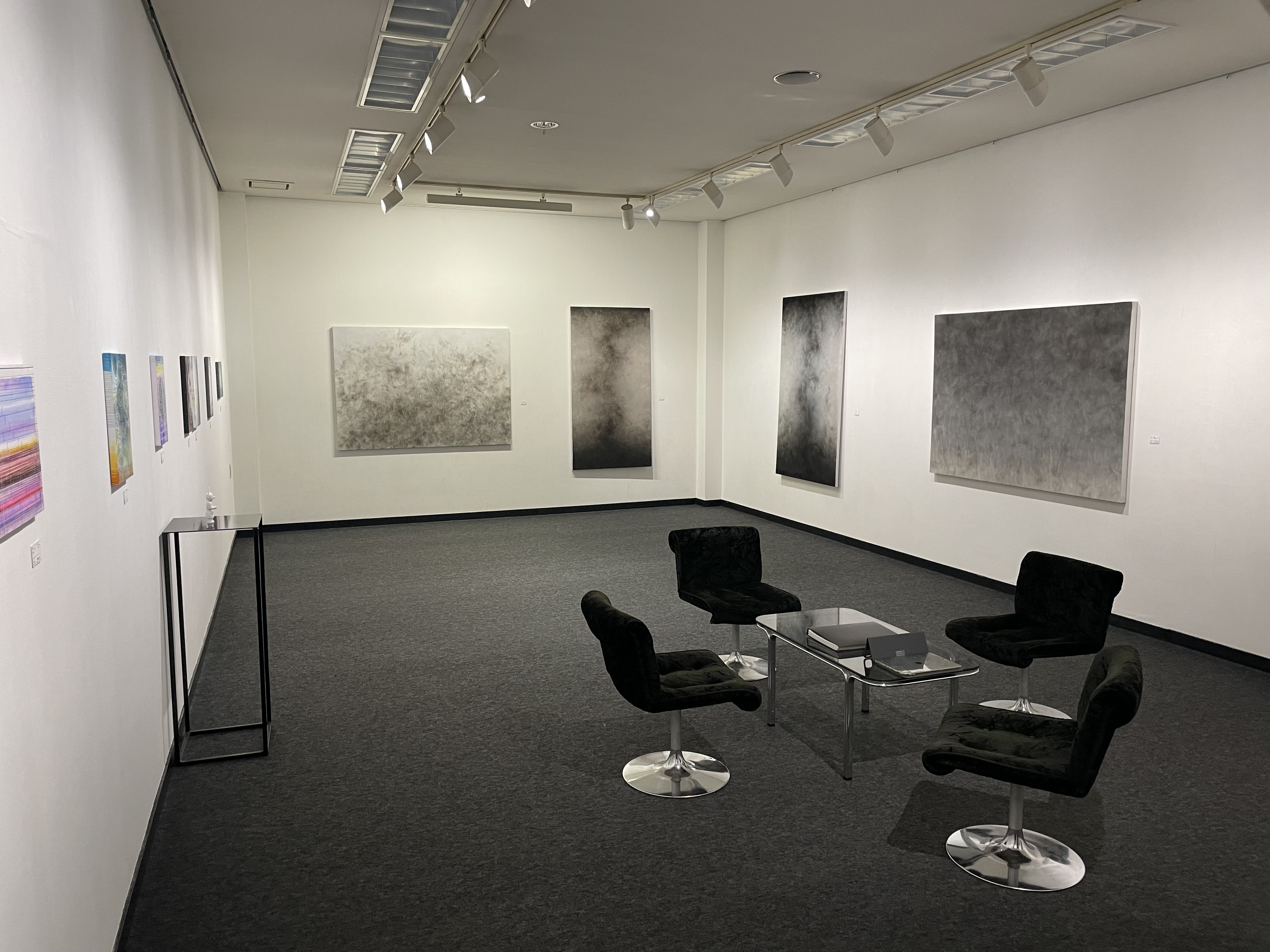
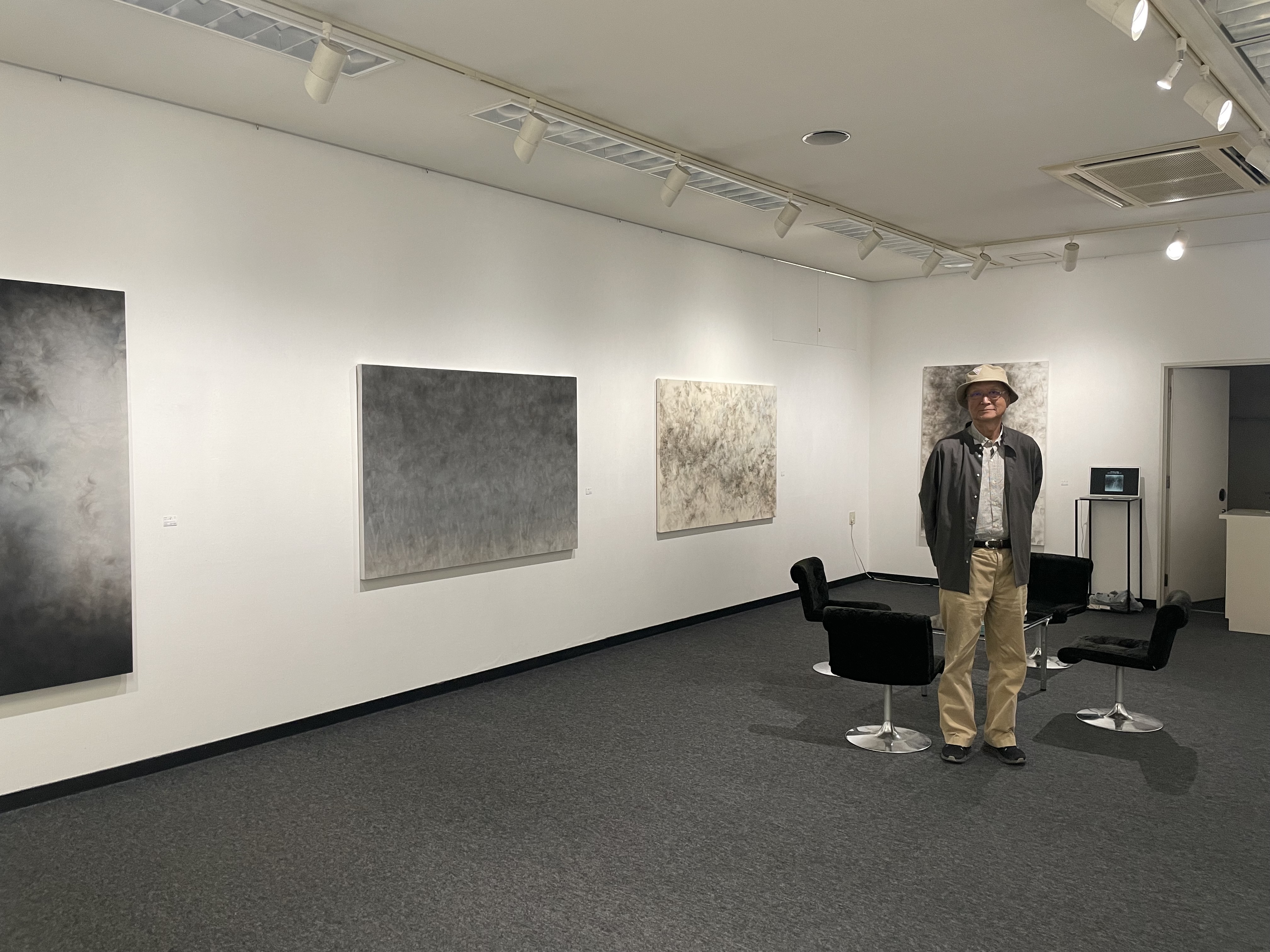
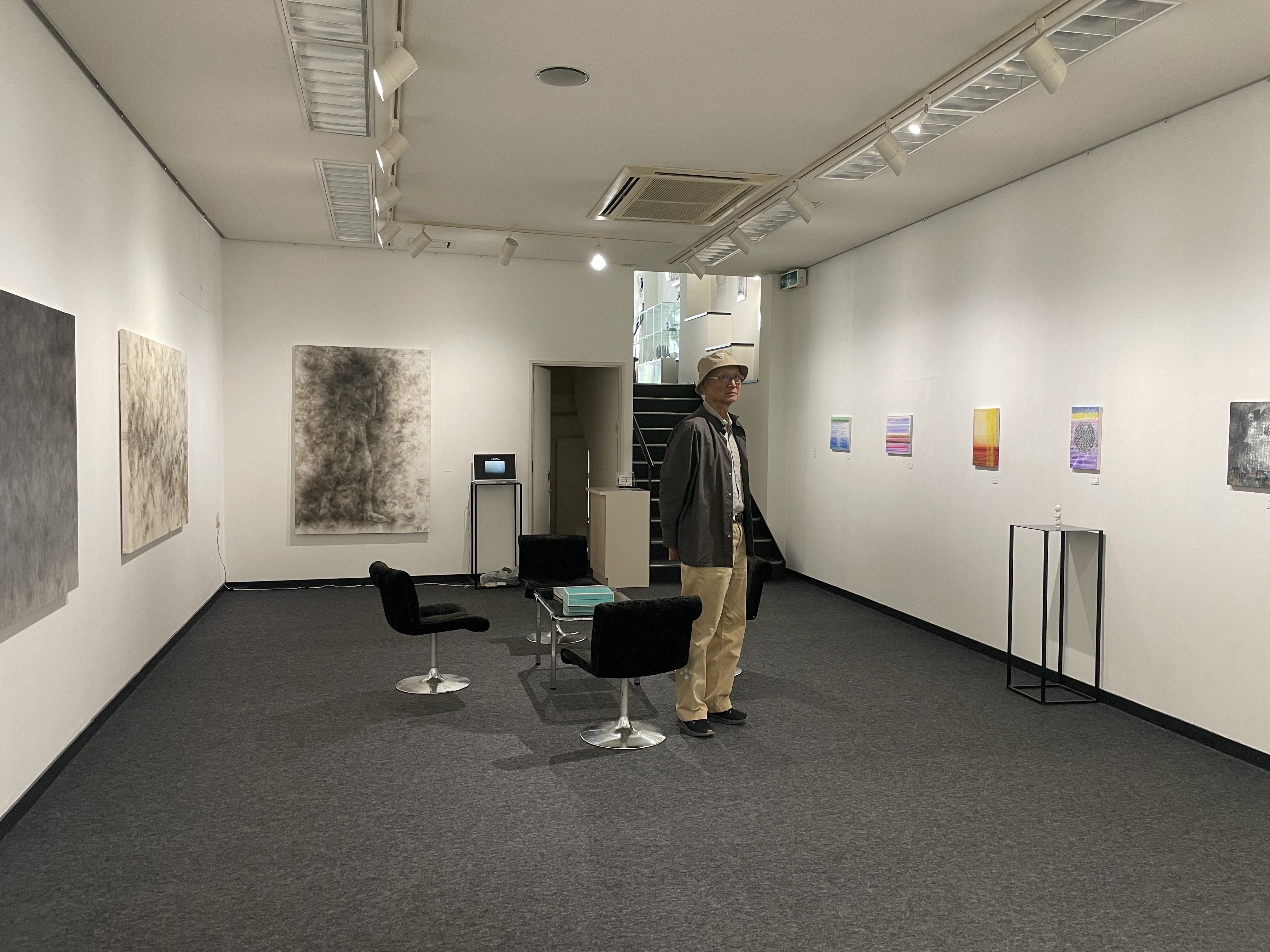
「原博史+谷川博子 展」
2023年10月7日〜29日 あーとらんどギャラリー
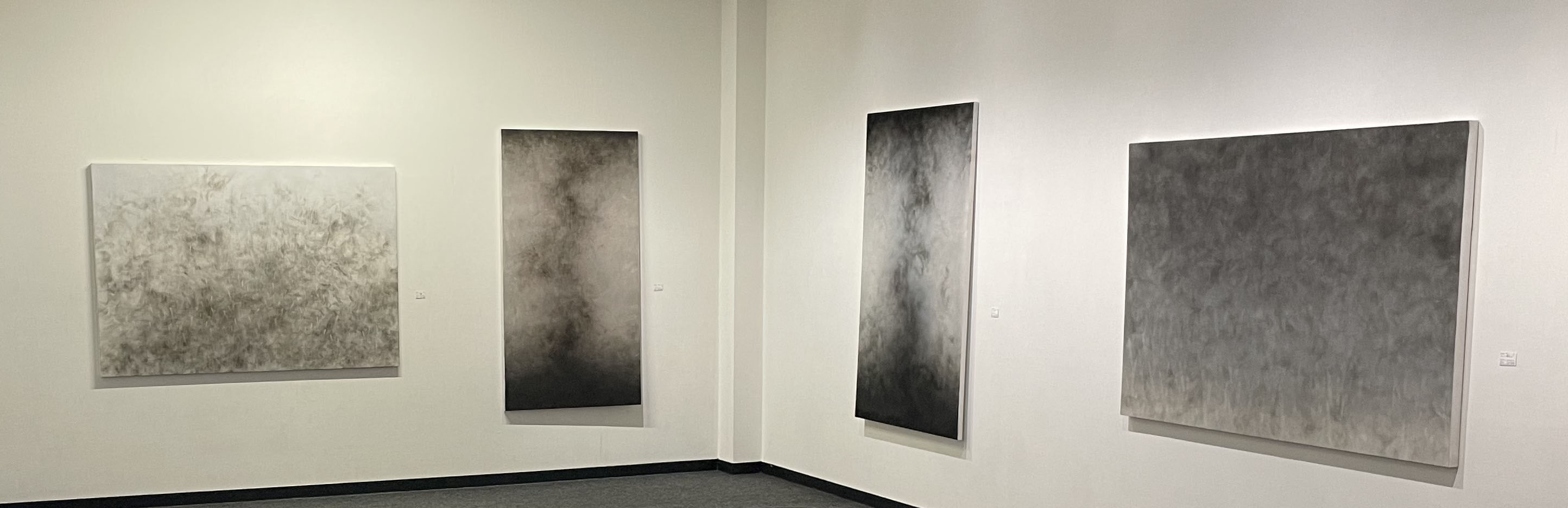
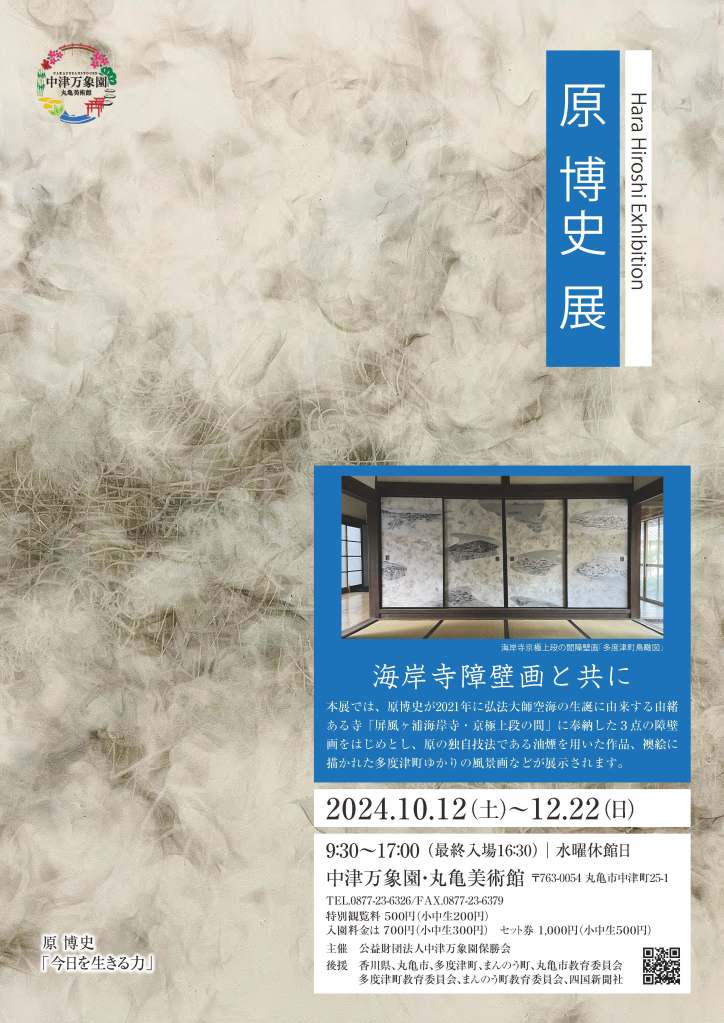
「原博史展ー海岸寺障壁画と共にー」
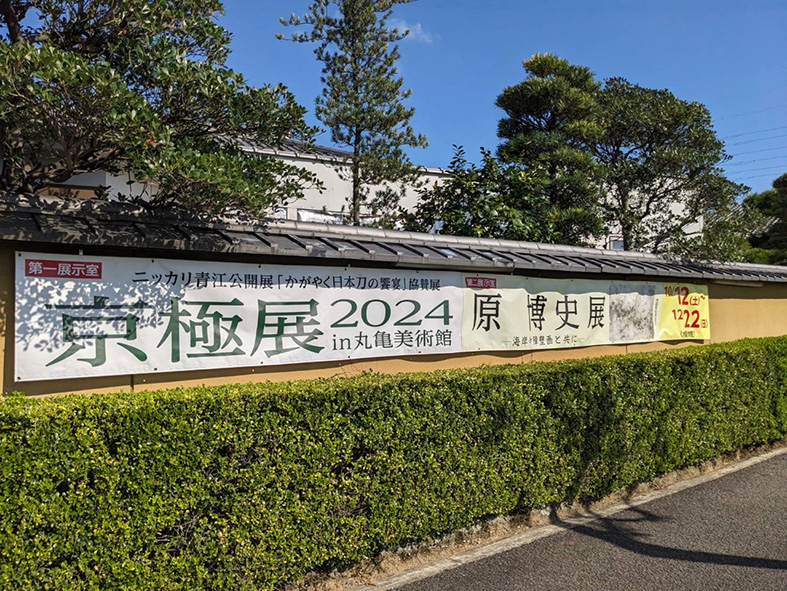
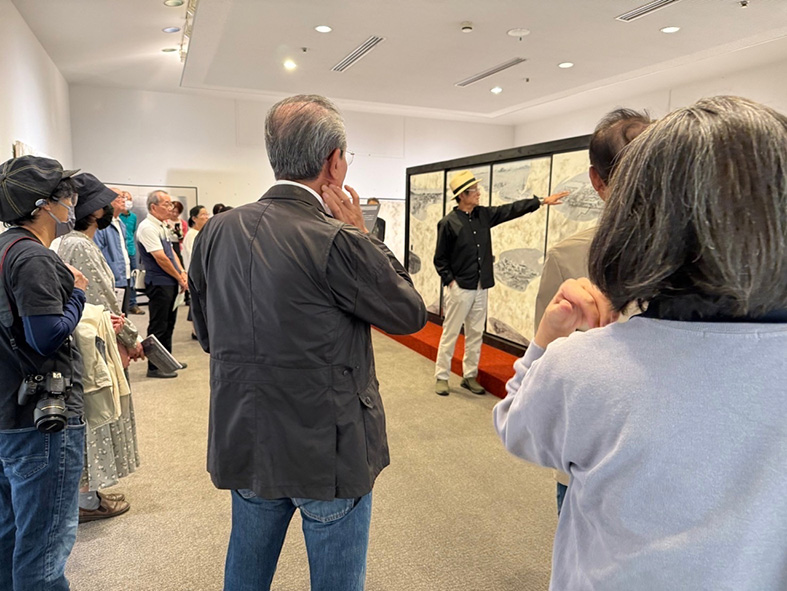
2024年10月12日〜12月22日 中津万象園・丸亀美術館
 Hara
Hara 